SEO & AI
How to Get Your Business Into Google’s AI Answers
Google now writes an answer at the top of the page before the usual links. Here is how local businesses get quoted in it.
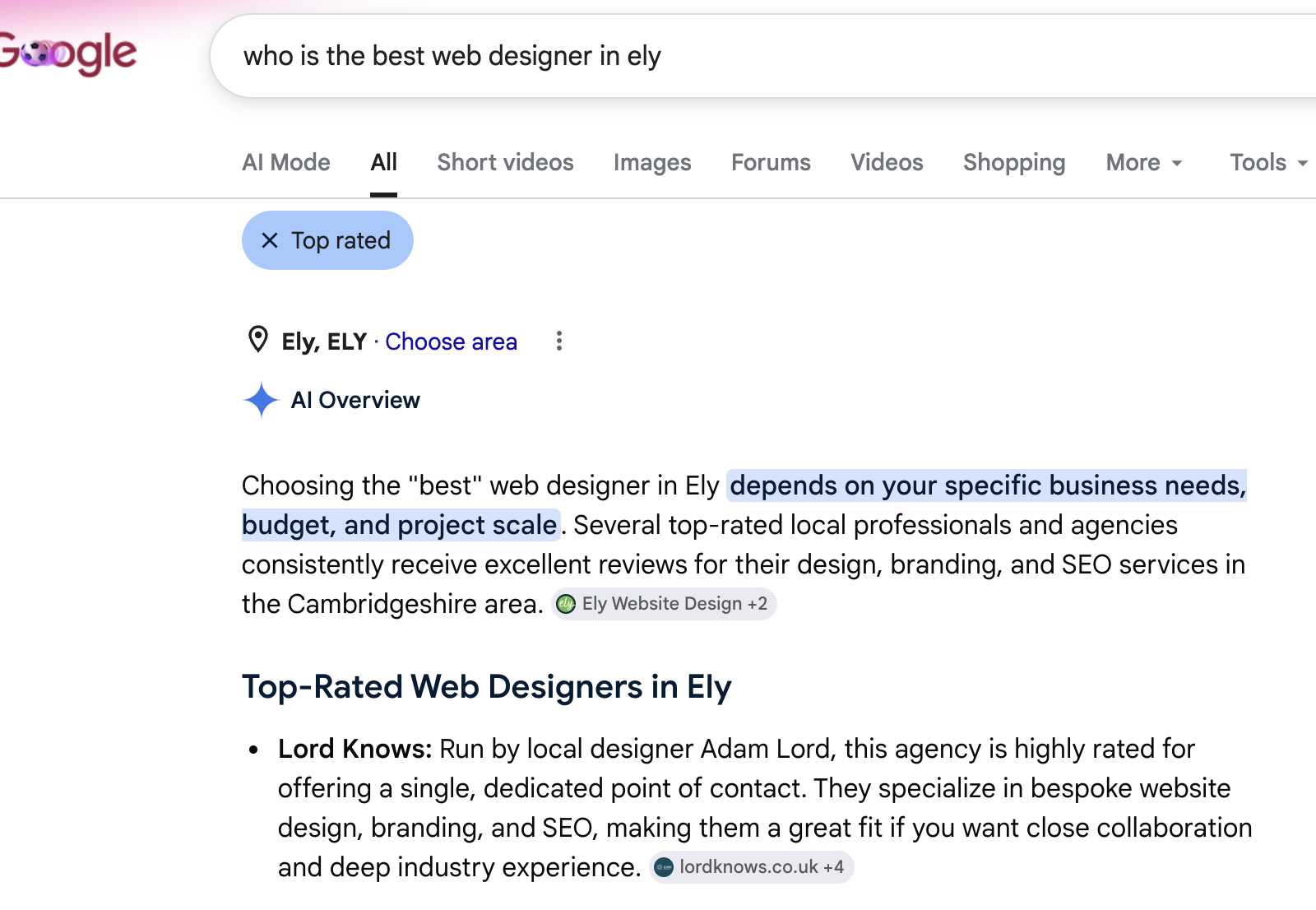
If you have searched for anything lately, you will have noticed it. Before the usual list of blue links, Google now drops in a written answer at the very top of the page. It is called an AI Overview, and it is quietly changing how customers find local businesses.
These overviews now show up in roughly a quarter of all searches, and around half of the informational ones (the “how”, “what” and “which” questions people type). For a small business, that is the new shop window. If Google’s AI quotes your site when someone asks “best place to do X near me”, you get noticed before your competitors get a look in. If it never mentions you, you may as well be invisible, even if you rank well in the normal results below.
The good news is that getting picked up is not a dark art, and you do not need a big budget. It comes down to making your content easy for the AI to read, trust and quote. Here is how to do it.
First, the reassuring bit
There is no secret button and no separate system to game. Google has confirmed that the same things that make a page rank well in normal search also make it eligible for AI Overviews. There are no extra requirements. So if you have been doing sensible SEO, you are already part of the way there. The shift is in emphasis: AI rewards content that is clear, well structured and genuinely helpful, and it punishes waffle harder than ever.
Answer the question, fast
The single biggest change in how you write is this: answer the question in the first sentence or two, then explain underneath.
Google’s AI scans your page looking for a clean, self-contained answer it can lift out. If your opening paragraph rambles before getting to the point, it moves on to a competitor who got there quicker. A useful trick is the “answer capsule”: a 40 to 60 word summary right at the top of a section that fully answers the question on its own. Write the snappy answer first, then back it up with detail, examples and your own experience.
Use questions as your headings
Think about how people actually talk to Google now. They type and speak in full questions: “how much does a garden annex cost to run”, “do I need planning permission for a holiday let”. Mirror that language in your page.
Turn your headings into the exact questions your customers ask, then answer each one directly in the paragraph beneath. This does two jobs at once. It matches the phrasing of real searches, and it breaks your page into tidy question-and-answer blocks that the AI can pull from easily. A page built this way reads naturally to humans and extracts cleanly for machines.
Show you know your stuff
Google weighs up something it calls E-E-A-T: Experience, Expertise, Authoritativeness and Trustworthiness. In plain terms, it is asking “can I trust this source enough to quote it to a user?”
You build that trust by demonstrating real, first-hand knowledge rather than rehashing what everyone else says. Write from experience. If you run the business, say so and share what you have actually learned. Put a proper author bio on your posts. Link to the other relevant pages on your own site so you cover a topic properly rather than in one thin article. AI systems prefer to cite sources that show consistent knowledge across a subject, so a cluster of linked, helpful pages beats a single isolated one.
Add structured data (schema)
This is the most technical step, but it is worth it. Schema is a bit of code in the background of your page that spells out, in a language search engines understand, exactly what your content is: this is a business, this is its address, this is a review, this is a frequently asked question.
Pages with valid schema are reported to be two to four times more likely to appear in AI Overviews and featured snippets. For a local business, the ones that matter most are:
- LocalBusiness schema, which confirms your name, address, phone number and opening hours
- FAQ schema, which marks up your questions and answers so they can be quoted directly
- Review schema, which surfaces your ratings
- Service schema, which describes what you actually offer
If your site runs on WordPress, you do not need to hand-code any of this. Plugins such as Rank Math or Yoast handle the common schema types for you, and a developer can add the rest in an afternoon.
Get your business details consistent everywhere
AI systems cross-check your business across the web before they trust it. If your name, address and phone number differ between your website, your Google Business Profile, Facebook and that old directory listing from years ago, it creates doubt. Make them identical everywhere.
While you are at it, fill in every field on your Google Business Profile. The description, every service with its own line, opening hours, service area, payment methods, the lot. For local searches, this profile feeds directly into what the AI knows about you.
Keep reviews fresh
Reviews are not just social proof for customers, they are a trust signal for the AI. What matters is not only the total number but how recent they are. A steady trickle of new reviews beats a big pile that all arrived two years ago. Ask happy customers to leave one, and reply to every review, ideally within a couple of days. Active, recent review activity is linked to better visibility in AI results.
Keep it current
AI Overviews favour pages that look maintained and dependable. Old prices, outdated advice or a “last updated 2021” stamp all chip away at trust. Revisit your key pages a couple of times a year, refresh the figures and dates, and the AI is more likely to keep treating you as a reliable source.
Where to start
You do not have to do all of this at once. If you want a sensible order:
- Rewrite your most important page so it answers its core question in the first two sentences.
- Turn its headings into real customer questions.
- Add LocalBusiness and FAQ schema (a plugin will do most of it).
- Tidy up your Google Business Profile and make your contact details match everywhere.
- Start asking for reviews regularly.
Do those five things and you will have done more than most of your local competitors. The businesses that show up in AI answers over the next year will not be the ones with the biggest marketing spend. They will be the ones who made their expertise easy to find, easy to trust and easy to quote.
Frequently asked questions
What is a Google AI Overview?
A Google AI Overview is a written answer that Google generates and places at the very top of the search results, above the usual list of links. It now appears for roughly a quarter of all searches and around half of informational ones, summarising and quoting from web pages it considers trustworthy.
How do I get my business into Google’s AI answers?
Answer the searcher’s question clearly in the first one or two sentences of a section, use real customer questions as your headings, demonstrate first-hand expertise, add schema markup, keep your business details consistent everywhere, and gather recent reviews. The same things that help you rank in normal search make you eligible for AI Overviews.
Do I need different SEO for AI Overviews?
No. Google has confirmed there are no extra requirements to appear in AI Overviews. The same good SEO practices apply, with more emphasis on clear, well structured, genuinely helpful content that an AI can read, trust and quote.
What is schema markup and do I need it?
Schema is background code that tells search engines exactly what your content is, such as a business, a review or a frequently asked question. Pages with valid schema are reported to be far more likely to appear in AI Overviews and featured snippets. For a local business, LocalBusiness, FAQ, Review and Service schema matter most, and WordPress plugins like Rank Math or Yoast can add them.
How long does it take to show up in an AI Overview?
There is no fixed timescale. Once Google has crawled and indexed your updated page it can appear quickly, but AI Overviews are volatile and personalised, so positions shift between users and over time. Consistent schema, fresh reviews and well structured answers make your visibility stickier rather than a one-off.